Account structure is the set of decisions you make before bidding ever enters the picture: which campaign types to run, how to group keywords, where budget sits, and what counts as a conversion. Those decisions constrain everything automation can do afterward.
Get them right and smart bidding has room to work. Get them wrong and no amount of optimization compensates, because you have limited what the algorithm is allowed to learn.
Why does account structure matter as much as bid strategy?
Because structure is the part automation has not absorbed. It encodes your intent: what Google should treat as a separate problem, where budget may and may not flow, and what counts as success.
Google's automation has absorbed a great deal of the work that used to define account management. Match types matter less. Manual bid adjustments are mostly gone. Ad rotation testing has largely been automated away.
Structure tells Google what success looks like in each case.
Two accounts with identical budget, creative, and targeting will perform differently if one separates campaigns by margin and the other does not. That difference is structural, and it is the part still worth your attention.
The guiding principle is simple: separate things that need different budgets, different targets, or different reporting. Combine everything else.
Structure has become simpler over the past few years, not more complex. Accounts fragmented into forty single keyword ad groups now starve every one of them of data.
Which Google Ads campaign type should I use?
Search for intent driven demand, Performance Max where you have the conversion data to steer it, remarketing for audiences who already know you, Demand Gen for reach, and Shopping for retail. Most accounts need two or three of these, not all five.
Search remains the core for intent driven demand. Use it when people are actively looking for what you sell and you want direct control over which queries you appear for. Search should generally hold the largest share of budget for lead generation and considered purchases.
Performance Max covers Google's full inventory with a single campaign and heavy automation. It works well for ecommerce with a strong product feed and sufficient conversion volume. It is riskier for lead generation, where it can find large numbers of cheap, low quality conversions if your conversion signal is not tightly defined. If you run PMax for leads, feed it a qualified lead signal rather than a raw form fill.
Remarketing and audience campaigns re engage people who already visited. Keep these separate from prospecting, always. Their economics are completely different, and combining them makes blended performance look good while hiding which half is working.
Demand Gen suits upper funnel visual reach. Judge it on assisted conversions rather than last click, or you will conclude it does not work and cut it.
Shopping, where you are not using PMax, remains valuable for retailers wanting explicit control over feed and bidding.
A common and reasonable structure for most businesses: branded Search separate from non branded Search, one PMax or Shopping campaign for ecommerce, and a remarketing campaign held apart from all of it.
Separate branded and non branded without exception. Branded search converts at rates that will otherwise mask non branded performance entirely.
How should I structure ad groups around intent rather than keywords?
The old approach grouped keywords by string similarity. The better approach groups them by what the searcher wants. In practice that means three to five ad groups per campaign, ten to twenty keywords in each, one landing page per group, and enough volume in every group to learn from.
Someone typing "project management software pricing" and someone typing "how much does project management software cost" have identical intent and should share an ad group, an ad, and a landing page. Someone typing "best project management software" is earlier in their thinking and deserves different messaging.
Practical guidelines:
Three to five ad groups per campaign is usually sufficient. More than ten is a sign you are fragmenting.
Ten to twenty keywords per ad group, all sharing one intent, so a single ad genuinely speaks to all of them.
One landing page per ad group. If two keyword sets need different pages, they need different ad groups.
Enough volume per ad group that Google has data to work with. Ad groups producing a handful of clicks a week never accumulate enough signal to be optimized.
Single keyword ad groups had a rationale under manual bidding. Under automation they mostly prevent the system from learning.
Budget lives at the campaign level, which is why campaign separation is really budget separation. Keep branded away from non branded so the cheap clicks cannot eat the expensive ones, split by margin where it differs materially, and give every campaign enough budget to accumulate conversions.
Do not let branded consume non branded budget. Branded search is cheap and converts well. In a shared campaign it will absorb spend and leave your actual acquisition efforts underfunded.
Separate by margin where it differs materially. If one product line earns three times the margin of another, they cannot share a target. Split them so each can be judged on its own economics.
Watch for budget constrained campaigns. A campaign limited by budget cannot bid on every auction it should win, so the algorithm becomes selective in ways you did not choose. Either raise the budget or narrow the targeting.
Give each campaign enough budget to accumulate conversions. A campaign producing three conversions a month cannot support automated bidding. Consolidate it into something larger.
Portfolio bid strategies are worth considering when several campaigns share a goal and you want budget to flow toward whichever is performing.
How should conversion actions support your account structure?
This is where structure and measurement meet, and where most accounts break down. Define conversions that reflect real value, mark only genuine outcomes as primary, attach values even to lead generation, and for B2B connect the offline result so bidding learns from closed business rather than form fills.
Define conversions that reflect real value. For ecommerce, purchases with accurate transaction values. For lead generation, ideally a qualified lead rather than any form submission.
Mark only genuine outcomes as primary. Primary actions steer bidding. Secondary actions report without influencing it. Most struggling accounts have too many primary actions.
Use conversion values even for lead generation. If a demo request is worth roughly ten times a content download, encode that. It lets value based bidding weight them correctly instead of treating them as equal.
Consider campaign level conversion goals when campaigns pursue genuinely different outcomes, so a brand awareness campaign is not judged against purchase conversions.
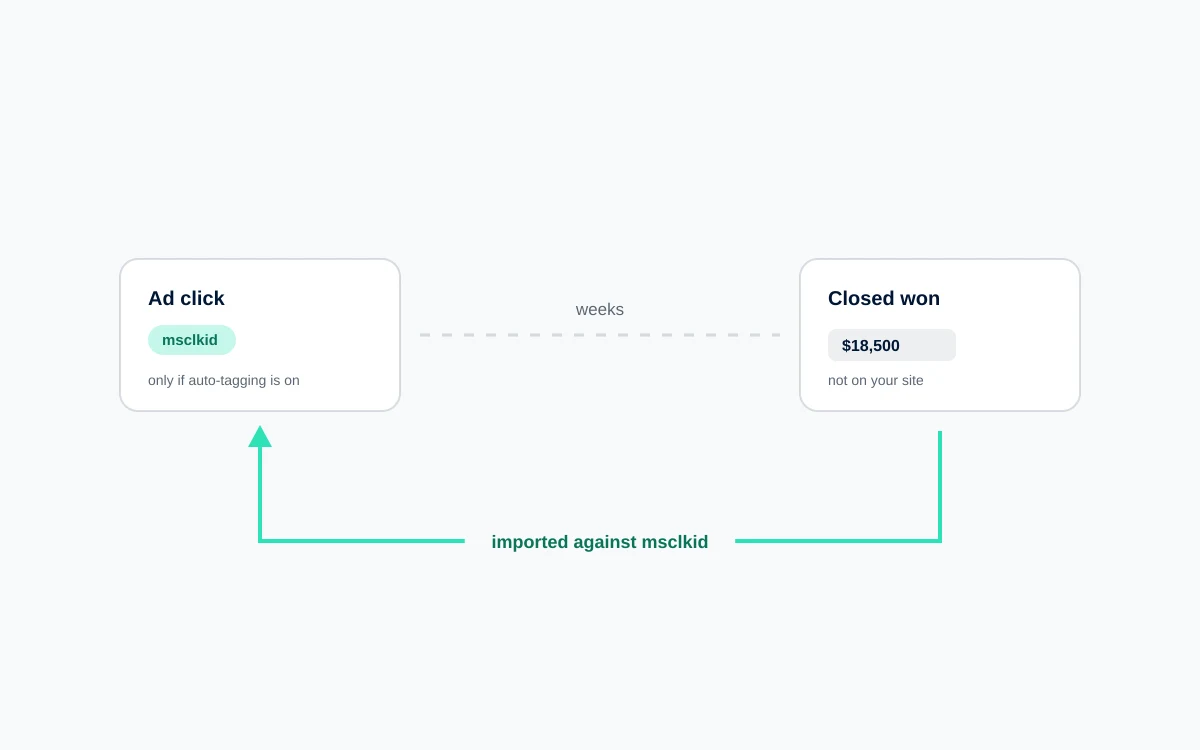
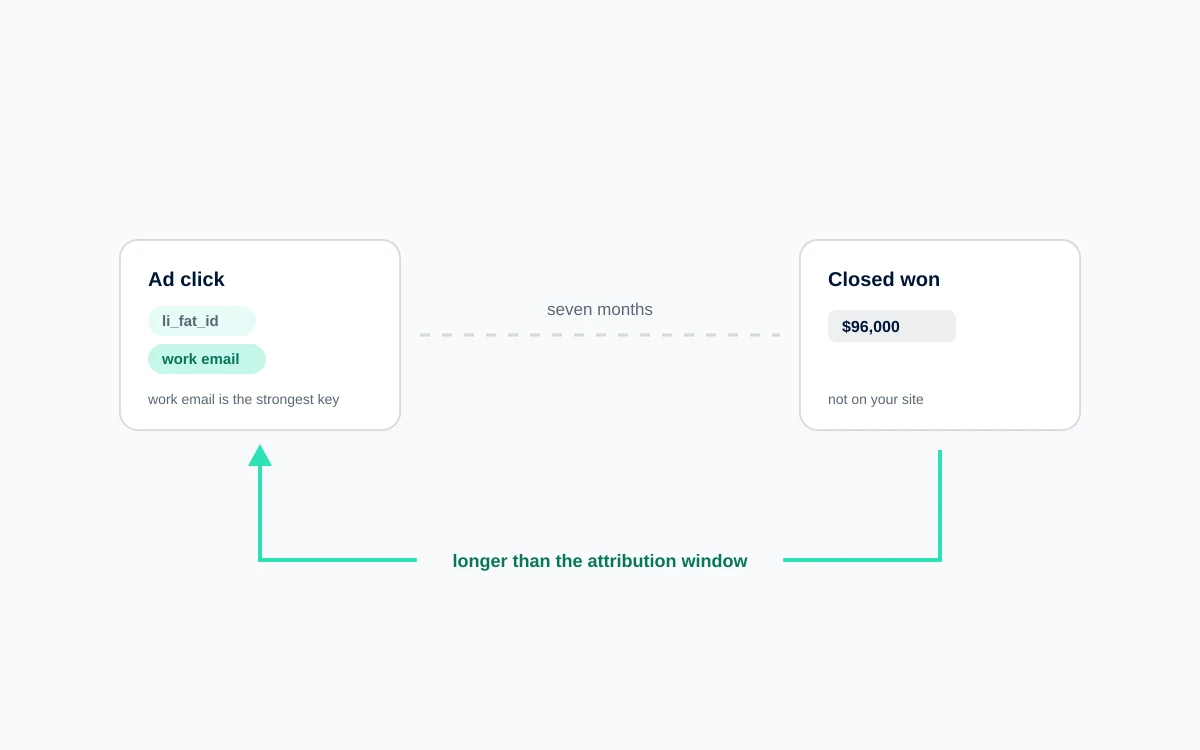
Connect offline outcomes for B2B. If your sales cycle continues past the form, offline conversion imports let bidding learn from closed deals rather than raw leads. This changes lead quality more than any structural adjustment.
What does a well structured account look like?
The test is not how many campaigns you run but whether each one exists for a stated reason and carries enough budget to learn from. Two profiles follow, and most accounts recognise themselves in one of them immediately.
Healthy: a manageable number of campaigns, each with a clear purpose and adequate budget. Branded separated from non branded. Prospecting separated from remarketing. Ad groups organized by intent with enough volume to learn from. A short list of primary conversion actions that genuinely represent revenue. Naming conventions that make the account legible to someone new.
Problematic: dozens of campaigns nobody can summarize. Branded and non branded mixed. Ad groups with two keywords and four clicks a month. Every conversion action primary. Campaigns launched for a promotion two years ago still running at low spend. Names like "Campaign 3 - copy".
The test is whether someone unfamiliar with the account could explain what each campaign is for within ten minutes. If not, the structure is costing you.
FAQ
How should I structure a Google Ads account?
Separate campaigns that need different budgets, targets, or reporting, and combine everything else. At minimum, keep branded and non branded search apart, and keep prospecting apart from remarketing. Within campaigns, build three to five ad groups organized by search intent rather than keyword string similarity, each with enough volume to give automated bidding something to learn from.
Should branded and non branded campaigns be separate?
Yes, without exception. Branded search is inexpensive and converts at much higher rates, so combining them lets branded absorb the budget and mask non branded performance. Separating them gives you honest visibility into what customer acquisition actually costs and prevents your prospecting efforts from being quietly defunded.
How many keywords should be in an ad group?
Roughly ten to twenty, all sharing a single search intent so one ad and one landing page can serve them all. Single keyword ad groups made sense under manual bidding but now fragment your data and starve automated bidding of the volume it needs. If a keyword needs a genuinely different message, it needs a different ad group.
It can be, but it carries more risk than for ecommerce. PMax optimizes toward whatever conversion signal you provide, and with a raw form fill signal it will efficiently find large volumes of low quality leads. If you run it for lead generation, feed it a qualified lead signal, ideally via offline conversion imports from your CRM.
How many campaigns should a Google Ads account have?
Enough to separate genuinely different budgets, targets, and audiences, and no more. Many businesses run well on three to six. The practical test is whether each campaign has a purpose you can state in a sentence and enough conversion volume to support automated bidding. Campaigns producing a handful of conversions monthly should be consolidated.

 Paid Media