Almost every tracking setup we review was built the same way: reactively. Someone needed to prove a campaign worked, so a conversion was added. A new landing page launched, so an event was created. A vendor required a pixel, so it went in.
Two years later the property contains forty events, nobody remembers who added most of them, and the marketing team has quietly stopped trusting the dashboard. Not because any single decision was wrong, but because no decision was made in the context of a plan.
That plan is what a measurement strategy is. It is the work that should happen before anyone opens Google Tag Manager, and it is the step almost everyone skips.
Why does tracking without a strategy create more problems than it solves?
Because tracking is cheap to add and expensive to remove. Events accumulate faster than anyone retires them, and an unplanned property drifts toward whatever was easiest to capture rather than whatever was worth knowing. The result is a large events list and a small number of answerable questions.
Adding an event takes ten minutes. Removing one requires knowing what depends on it, which reports reference it, whether any audience is built on it, and whether anyone will notice the gap. Most teams never take that risk, so events accumulate permanently.
The compounding cost is not storage. It is ambiguity. When your property has three events that could plausibly represent a lead, every report requires a judgment call about which one to use, and different people make different calls. Two teams present two numbers for the same metric in the same meeting, and the credibility of all analytics takes the damage.
Worse, unplanned tracking optimizes for what is easy to capture rather than what is worth knowing. Page views are trivial to record. Whether a lead was qualified is not. So teams end up with exhaustive data about behavior that does not matter and nothing at all about the moments that decide revenue.
What is a measurement strategy?
It is a document, and it is shorter than people expect. It states what your business needs to know, which user actions provide evidence about those questions, how each action will be captured, and what every event is named. Five to seven questions is a strategy, and everything technical derives from them.
What makes it valuable is the order. It starts from decisions and works backward to tags. Conventional setups start from tags and hope decisions emerge.
A useful strategy answers, in writing:
- What are the handful of questions this business needs data to answer?
- Which user actions constitute evidence for each question?
- Which of those actions are conversions, and which are supporting signals?
- What is each event called, and what parameters does it carry?
- Where does each value come from, and who is responsible for making it available?
- Which platforms need to receive which events?
Once that exists, implementation becomes mechanical. Without it, implementation is a series of independent guesses.
What is the difference between tracking what is easy and tracking what matters?
This distinction is the entire value of the exercise. Easy things are the ones GA4 will capture for you automatically, which is exactly why they tell you so little. The things that decide budget tend to require a decision about what to record and an agreement about what it means.
Easy to track: page views, scroll depth, video plays, time on page, file downloads, outbound clicks. Enhanced measurement in GA4 will give you most of these automatically, which is precisely why they dominate reporting. They are free.
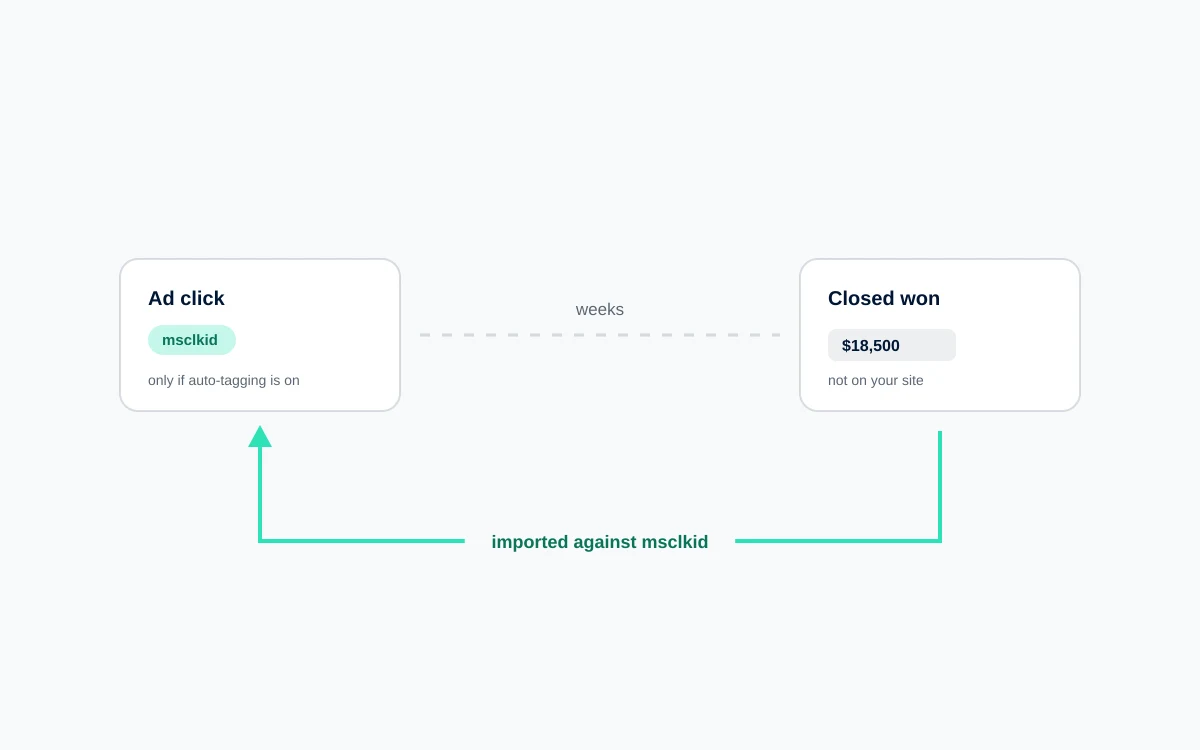
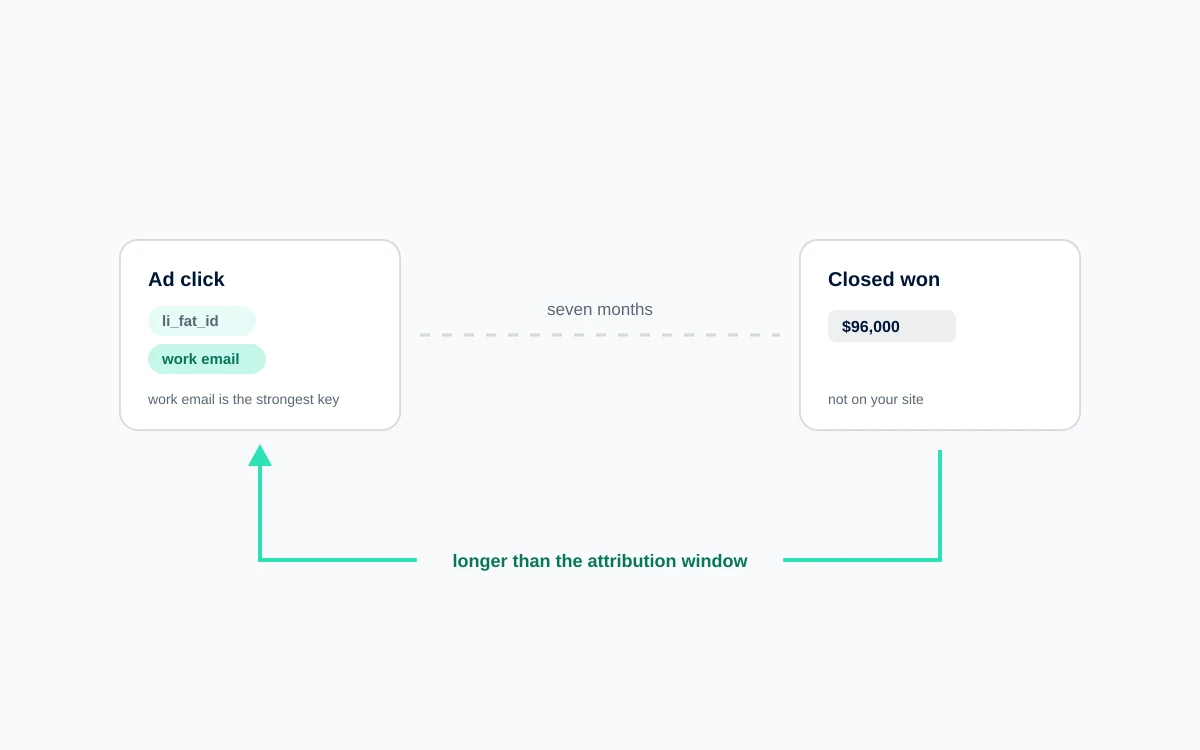
Hard to track and worth far more: whether a lead was qualified, which content a customer saw before their first purchase, how long the path from first touch to closed deal takes, which acquisition channels produce customers who stay, what a lead is actually worth by source.
Notice that none of the second list is a website event. Each requires connecting site behavior to something that happens elsewhere, usually in a CRM or a billing system. That connection never happens by accident. It only happens when a strategy identifies it as necessary before implementation begins.
The teams with the most events are rarely the teams with the best answers.
How do I define my core business questions before touching GTM or GA4?
Get the right people in a room and ask what decisions they make with data. Not which metrics they look at, which decisions they make, because only the second tells you what evidence is actually needed. Keep the list to five to seven questions and hold that line.
Not what metrics they look at. What decisions. There is a large difference between "we review the traffic report" and "we decide monthly where to move budget between channels". The second tells you what to measure. The first tells you what someone got used to looking at.
Useful questions sound like this:
- Which channels produce customers, not just leads?
- Where in the funnel do qualified prospects drop out?
- What is our actual cost per acquired customer by source?
- Which content contributes to deals that close?
- Are the leads we generate getting better or worse over time?
Then for each question, work out what evidence would answer it. "Which channels produce customers" requires source data captured at first touch, retained through the session, stored on the lead record in the CRM, and joined to the eventual deal outcome. That is a specific technical requirement, derived from a business question, and it will never emerge from a conversation that starts with "what events should we track".
Hold the line on scope. Five to seven questions is a strategy. Twenty is a wish list.
What does a documented measurement plan include?
Turn those questions into a specification your developers can build against. Six parts do it: an event inventory, a parameter specification, a conversion definition, a data layer specification, a platform mapping, and a record of who owns each piece. Anything less and implementation goes back to guesswork.
An event inventory. Every event you will track, with its exact name, when it fires, and why it exists. Naming conventions decided once and applied consistently, because inconsistent naming is unfixable after the fact.
A parameter specification. For each event, the parameters it carries, their data types, and where the values originate. This is the part your engineering team needs, and the part most often left vague.
A conversion definition. Which events are key events, and which are supporting context. Keep this list short. If everything is a conversion, nothing is.
A data layer specification. The precise object structure your site must push, at what point in the page lifecycle. Written so a developer can implement it without a follow up meeting.
A platform mapping. Which events go to GA4, which to Google Ads, which to Meta, and how deduplication is handled where the same event goes to more than one place.
An ownership record. Who maintains this, and when it gets reviewed.
The data quality effect is immediate and mostly about subtraction: once you define what should be tracked, everything else becomes a candidate for removal and the property gets smaller and clearer for the first time in years. The ad performance effect is larger, and the organisational one compounds for longer than either.
The ad performance effect is larger. Smart bidding optimizes toward the conversions you report. A strategy forces the question of which conversions genuinely represent business value, which usually reveals that several currently marked as conversions do not. Removing them changes what the algorithm chases.
The compounding effect is organizational. When the plan is written down, a new hire can read it, an agency can be held to it, and a site redesign can be checked against it before launch rather than after tracking has silently broken.
The order matters
Strategy, then implementation, then reporting. Every step out of order costs more to fix than it saved.
If you already have tracking in place and no plan behind it, you are not starting over. You are documenting what exists, deciding what should exist, and closing the gap. That is usually a few weeks of work, and it is the difference between analytics as an asset and analytics as an argument.
FAQ
What is a measurement strategy in analytics?
A measurement strategy is a written plan that defines what your business needs to know, which user actions provide evidence for those questions, and how each will be tracked. It covers event names, parameters, conversion definitions, and data layer requirements. It is created before implementation so that tracking is built toward decisions rather than assembled reactively.
Do I need a measurement plan if I already have GA4 set up?
Yes, and arguably more urgently. An existing setup built without a plan usually contains duplicate events, unclear naming, and conversions that do not reflect business value. Documenting what you have and comparing it against what you need turns an accumulated mess into a deliberate system, and typically shortens rather than lengthens your event list.
How long does it take to create a measurement strategy?
For most mid sized businesses, two to four weeks. The stakeholder interviews and question definition take about a week. Mapping the customer journey and specifying events takes another. The remainder is documentation and review. Implementation is a separate phase, and it moves considerably faster when the specification is already written.
What is the difference between a measurement strategy and a GA4 audit?
An audit examines what you currently have and identifies what is broken. A measurement strategy defines what you should have based on business goals, regardless of what exists now. Many teams need both: an audit to clean up the current setup, then a strategy to make sure the rebuilt version is designed rather than accumulated.
Who should be involved in building a measurement strategy?
Whoever makes decisions with the data, whoever owns the revenue targets, and whoever will implement it. Typically that means marketing leadership, a paid media owner, a sales or revenue representative if the funnel extends past the website, and a developer. Skipping the developer is the most common mistake, because they determine what is technically available to capture.

 Paid Media